Why Bedford Is Ideal for Solar PV and Battery Storage
With long, bright days from spring through autumn and relatively mild winters, Bedford sits in a favourable part of the UK for rooftop solar. Typical systems in Bedfordshire can generate around 900–1,100 kWh per kWp per year, meaning a well‑designed 4 kWp array might produce approximately 3,600–4,400 kWh annually. That output, paired with intelligent battery storage and smart tariffs, allows households and businesses to shave peak usage, reduce grid imports, and stabilise bills despite energy market fluctuations.
The town’s mix of property types—from Victorian terraces in the Castle Quarter and Brickhill semis to new builds in Wixams and larger homes in Biddenham—offers many suitable roofscapes. South‑facing roofs still deliver the strongest yields, but modern high‑efficiency modules, optimisers, and microinverters can make east/west and partially shaded roofs perform impressively. Commercial premises across the Elstow and Kempston Road industrial areas also benefit from expansive, often low‑pitch roofs that are perfect for larger arrays feeding daytime operations.
Policy and market drivers strengthen the case. The Smart Export Guarantee (SEG) pays for exported electricity, and 0% VAT on energy‑saving materials currently supports residential installations. For many households, coupling solar panels with a hybrid inverter and a 5–10 kWh battery enables time‑of‑use shifting: charging the battery with surplus generation or low‑rate overnight power and discharging during high‑rate evening peaks. EV drivers gain extra value by scheduling car charging when the sun is strongest or when tariffs drop, further lowering running costs.
Electrical safety and compliance are equally compelling reasons to go solar the right way. Reputable Bedford‑based electricians align systems with current wiring regulations, ensure robust protection via RCDs and surge devices, and integrate the array safely with consumer units. For landlords and commercial sites, a professional approach dovetails with ongoing compliance obligations—such as EICR inspections, emergency lighting, and PAT testing—making solar one part of a broader, future‑proof electrical strategy.
For those ready to explore system design, local roof assessments, and integrated battery options, discover more about Solar Panels in Bedford and how they can be tailored to your property and energy profile.
From Survey to Switch‑On: How a Quality Installation Works in Bedfordshire
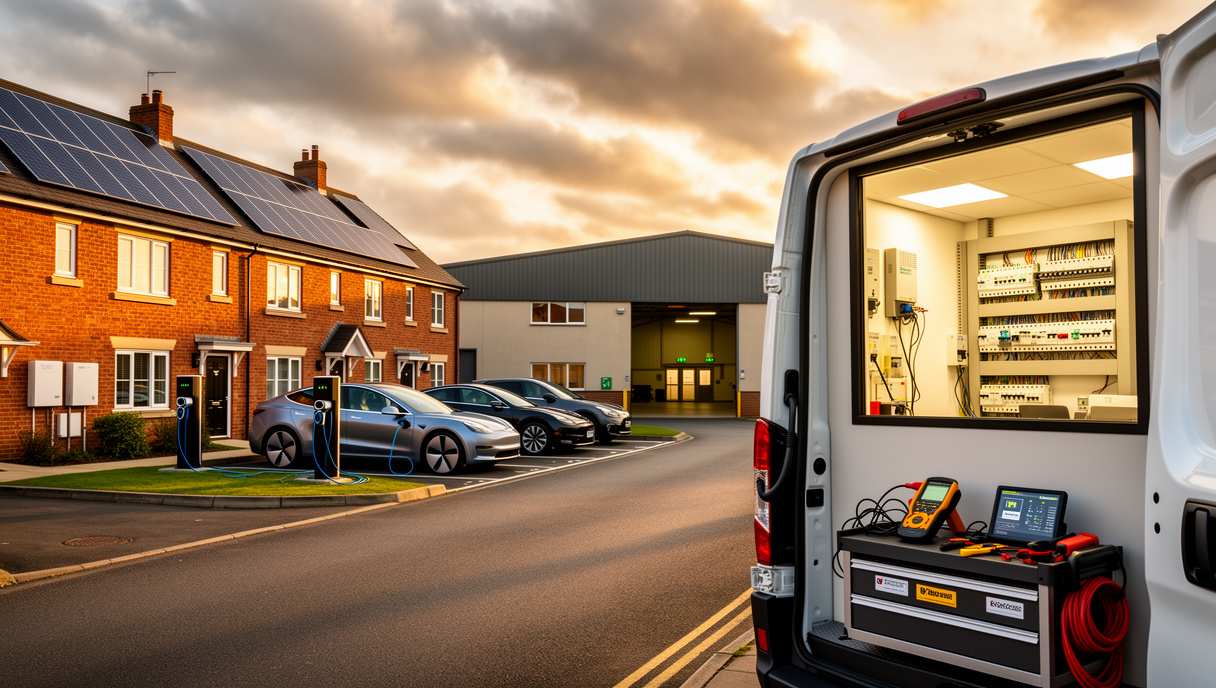
Every successful PV project starts with a careful on‑site survey. Installers assess roof condition, pitch, orientation, shading, access for scaffolding, and the integrity of fixings. They also review your consumer unit, earthing, bonding, and spare ways for new circuits or isolation devices. A reputable designer will model solar yield using local irradiance data, match array size to your load profile, and advise on hybrid inverters with battery compatibility if you plan to store excess energy or charge overnight on cheap rates.
Permitted development rights typically cover rooftop systems in Bedford, provided panels are mounted flush (not protruding more than 200 mm) and sited away from the roof edge where feasible. Properties in conservation areas, listed buildings, or flats may need specific permissions; checking Bedford Borough Council guidance early prevents delays. For commercial properties, structural checks are prudent—especially on wide‑span roofs—ensuring clamps, rails, and wind loadings meet standards.
Grid notification is a key step. Most domestic systems fall under G98 rules; larger or more complex arrays may require a G99 application to the local Distribution Network Operator. In Bedfordshire, that process helps confirm safe export levels and ensures your system will operate harmoniously with the local grid. A competent installer manages this paperwork, alongside electrical certificates and Building Regulations notifications, so your SEG export registration proceeds smoothly once you’re generating.
Component choice matters. Half‑cut monocrystalline modules with anti‑reflective glass and solid product/warranty terms minimise degradation over decades. Inverters come in three broad styles: string inverters for straightforward roofs; microinverters where module‑level optimisation is needed due to complex shading or multiple aspects; and hybrid inverters that manage both PV and batteries. If shading exists—think chimneys or mature trees in areas like Bromham or Clapham—module optimisers can preserve output. Surge protection, neatly managed cabling, clearly labelled isolators, and accurate monitoring setup distinguish a robust, professional job.
Commissioning involves thorough testing: DC insulation checks, polarity, AC connections, RCD trip times, and verification of earthing arrangements. Installers confirm monitoring portals and apps, demonstrate safe shutdown procedures, and fine‑tune charge/discharge windows for batteries. Homeowners then submit SEG documentation (usually including proof of compliance and meter details), and, once approved, begin earning credit for exported energy. With a well‑planned handover, you’ll have clear guidance on maintenance, warranty claims, and performance expectations—supporting dependable, low‑carbon generation for years to come.
Realistic Savings, Smart Tariffs, and Bedford‑Based Scenarios
Bedford’s varied housing stock and business landscape create diverse solar opportunities. Consider a three‑bed semi in Putnoe with a 4 kWp array and a 5–8 kWh battery. Annual generation might land around 3,800–4,200 kWh, with self‑consumption boosted by the battery to cover evening usage. Pairing this setup with a time‑of‑use tariff can reduce peak imports and enable strategic overnight charging when prices are low. Over a year, that family could offset a substantial share of grid energy, while exporting surplus on bright days for SEG payments—delivering a pragmatic path to bill stability and lower carbon.
In Victorian terraces near the Castle Quarter, roof space and shading can be tighter. Here, east/west arrays with optimisers or microinverters often shine, pushing generation across more hours and smoothing household demand. Even a compact 2.5–3.5 kWp system, when combined with good energy habits—LED lighting, efficient appliances, and smart heating controls—can make a meaningful dent in electricity costs. Where roof‑mounting is constrained by conservation rules, discreet rear‑roof placement or outbuilding arrays may provide compliant alternatives.
For SMEs around the Elstow industrial corridor or Bedford town centre, daytime loads align naturally with solar output. A 20 kWp rooftop system for a workshop or warehouse can directly feed machinery, IT, and lighting, especially when integrated with LED upgrades and power factor improvements. Commercial sites often see strong returns by trimming peak imports and mitigating future price rises. If weekend operations are light, batteries can soak up sunny Saturday generation for Monday morning starts, and export tariffs help monetise any excess. Layer in planned EV charging bays for staff or fleet vehicles, and the site’s solar capacity becomes even more valuable.
Financially, payback periods vary with system size, consumption patterns, tariffs, and export rates, but many Bedford installations target a 6–10 year horizon. Reliable monitoring ensures performance stays on track, flagging issues like unexpected shading, inverter faults, or connectivity drops. Preventative maintenance is modest: visual inspections, occasional cleaning (especially under roadside dust or pollen), and inverter health checks. Most panels carry 20–25 year performance warranties, while inverters often need replacement once over the system’s lifetime, a cost that should be factored into long‑term planning.
Compliance, safety, and documentation matter as much as yield. Quality installers deliver clear electrical certification, use appropriate surge and residual‑current protection, and design with future upgrades in mind—such as larger batteries, additional panels, or heat pump integration. Landlords and facilities managers can align solar adoption with regular EICR schedules, emergency lighting checks, and PAT testing, embedding renewable energy within a broader maintenance framework. By tailoring system design to Bedford’s local conditions—roof type, grid capacity, planning context, and occupant needs—homeowners and businesses unlock dependable savings and a cleaner energy footprint without compromising safety or performance.

Vienna industrial designer mapping coffee farms in Rwanda. Gisela writes on fair-trade sourcing, Bauhaus typography, and AI image-prompt hacks. She sketches packaging concepts on banana leaves and hosts hilltop design critiques at sunrise.