When a home relies on a Heat Interface Unit, a sudden loss of heating can be confusing. Radiators sit cold, the thermostat keeps calling for heat, and yet the property never warms up. In many flats and mixed‑use buildings, the HIU is the bridge between the central plant and the apartment’s heating circuit. Understanding how this bridge works—and why it fails—helps to turn a frustrating no heating situation into a quick, confident fix.
This guide explains the most common reasons a heat interface unit stops delivering space heating, the checks that can be done safely by residents, and the professional tests engineers carry out on London heat networks every day. It also shares real scenarios that show how targeted diagnostics save time, energy, and money.
Why an HIU shows no heating: the most common causes and what symptoms to look for
An HIU does two jobs: it provides domestic hot water and drives the apartment’s space heating. When there is no heating, the first diagnostic question is simple: is hot water still available? If hot water is fine but radiators are cold, the fault often sits on the heating side—such as a stuck motorised valve, a fouled plate heat exchanger, or a control issue. If both heating and hot water are out, attention turns to primary supply, power to the unit, or wider network issues.
In many buildings, primary water from the central plant arrives at the HIU under controlled differential pressure. A blocked primary strainer, a failed pressure controller, or temporarily low flow on the network can starve the HIU, leaving radiators cold or only tepid. Telltale signs include primary flow pipes that never get reliably hot when the thermostat calls for heat.
On indirect HIUs, the apartment’s heating circuit is hydraulically separated from the primary side. A simple but common cause of no heating here is low secondary pressure—often below 0.8–1.0 bar because of air in the system or after radiator bleeding. The secondary pump may run, but without adequate charge and venting, circulation stops and radiators remain cold. Another frequent culprit is sludge: untreated water can block strainers or narrow passages in the heating plate heat exchanger, choking flow and raising return temperatures.
Controls are equally important. Many HIUs include a summer/winter selector, weather compensation, and thermostats or time controls. A selector left in summer mode, flat thermostat batteries, or an incorrectly scheduled timeclock can mimic a system fault. Where there is a room thermostat or programmable stat, a weak signal or wiring issue prevents the HIU from seeing a heat demand. If the hot water still fires instantly but the heating never starts, a failed actuator or 2‑port/3‑port valve that diverts primary energy to the wrong circuit is likely.
Less obvious issues include a bypass set too high, which “short‑circuits” heat back to return instead of sending it through the radiators, or a defective return temperature limiter that shuts heating prematurely. On larger networks, building management systems can cap primary temperature to protect the plant; if capped too aggressively, apartments may see persistent lukewarm radiators even though components are healthy.
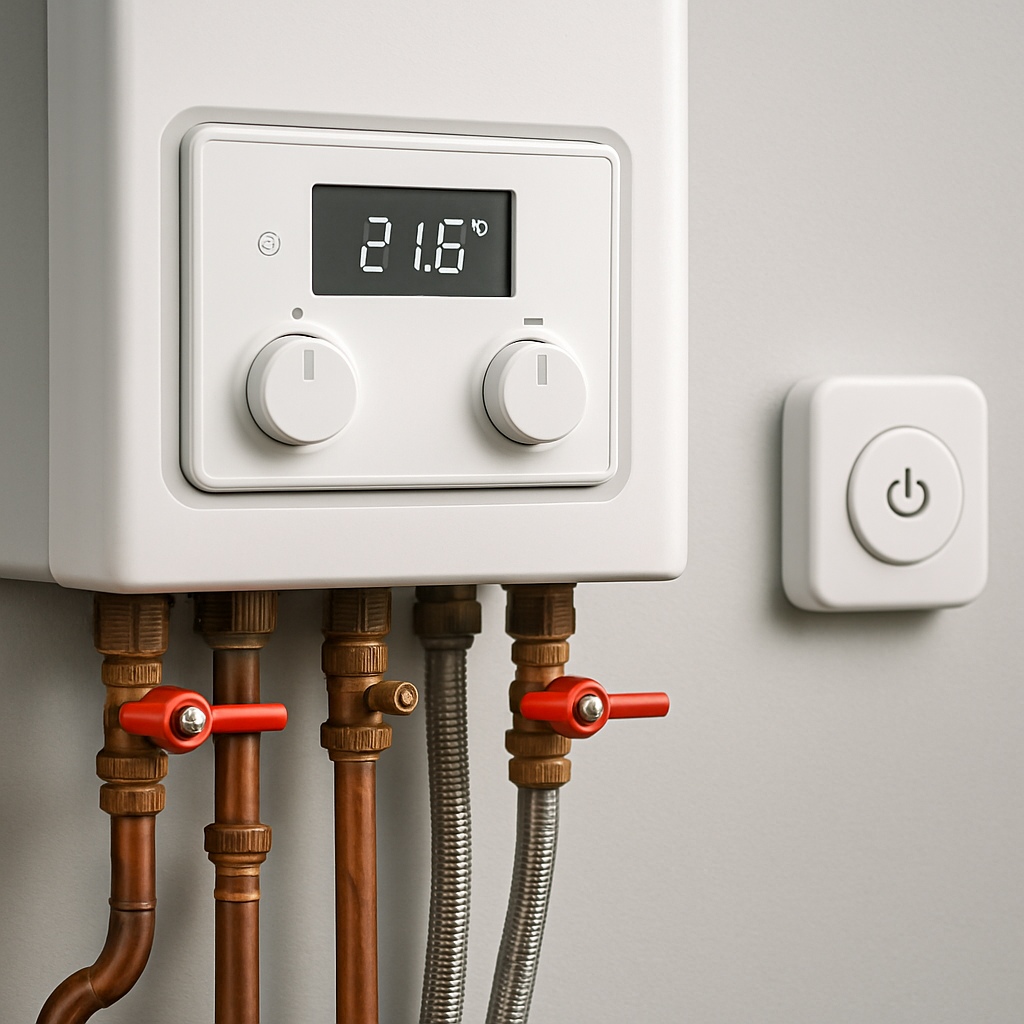
Smart checks you can do—and the professional tests engineers use to solve HIU no-heat faults
Before booking a callout, a few safe checks can rule out simple causes. Confirm the thermostat is on, with fresh batteries, and set above current room temperature. Ensure the heating schedule is active, not in holiday or summer mode. Open thermostatic radiator valves fully, especially in the room with the wall thermostat. If your HIU has a heating selector, ensure it is set to winter. On indirect HIUs with a visible gauge, secondary pressure near 1.0–1.5 bar is typical when cold; if it is low, topping up via the filling loop and bleeding radiators may restore circulation. After bleeding, recheck pressure and top up again. Finally, verify power to the HIU at the fused spur; a tripped spur can leave the unit unresponsive even if the plant is fine.
If those steps do not restore heat, professional diagnostics come next. Engineers start by confirming primary conditions: supply temperature, return temperature, and differential pressure across the HIU. A quick thermometer or clamp probe check reveals whether the network is delivering adequate heat and pressure. Strainers on the primary side are inspected and cleaned; even a thin film of debris can slash available flow to the heating circuit. Where debris is persistent, magnetic filtration and, if needed, targeted flushing are considered.
Control diagnostics follow. Engineers check that a valid heat demand reaches the HIU by testing room stat inputs and the HIU’s control board. Actuator motors and motorised valves are exercised and tested for smooth movement and correct end switches. A stuck actuator or faulty end switch can allow hot water to work while blocking heating entirely. Sensors, usually NTC types, are measured for resistance to verify correct temperature readings; faulty sensors can cause the unit to throttle or never open for space heating.
On indirect HIUs, the secondary pump is tested for rotation and flow. Airlocks are purged using built‑in air vents and radiator bleed points. If balancing is poor, engineers adjust bypasses, flow limiters, and lockshields to ensure heat travels to all emitters rather than cycling through the path of least resistance. For units showing high return temperatures and poor radiator performance, the heating plate heat exchanger may be partially fouled; descaling or replacement restores correct delta‑T and output.
Commissioning values are then set to network specifications, such as target delta‑T, maximum flow rates, and return temperature limits. These adjustments both fix no heating symptoms and protect energy efficiency. For urgent problems such as HIU no heating, timely diagnostics prevent extended downtime and avoid secondary issues like damp and frozen pipework during cold spells.
Real scenarios from London flats—and how to prevent HIU no-heat issues before winter
Consider a modern apartment where hot water was fine but radiators stayed stone cold. The thermostat called for heat and the HIU’s indicator showed demand. The primary flow pipe warmed slightly, then cooled. The cause was a blocked primary strainer: even thin silt restricted flow so heavily that the 2‑port heating valve starved shortly after opening. Cleaning the strainer and recommissioning restored full radiator heat within minutes and reduced return temperatures, improving network efficiency.
In another case, an indirect HIU showed 0.2 bar on the secondary gauge after the occupants bled radiators. The pump ran but could not circulate water against trapped air. Repressurising to 1.2 bar, bleeding the highest radiator, and purging the automatic air vent brought instant warmth back to every room. As a prevention step, the filling loop was labelled clearly and a brief handover note left so the residents could top up safely in future.
Lukewarm radiators across several flats in the same block often point to wider network conditions. One building in East London saw a sharp dip in primary differential pressure after a plantroom pump fault. Apartments reported intermittent no heating, especially at peak times. Temporary balancing adjustments inside the HIUs helped, but full resolution came only after the central pump was restored and the DP controller re‑set. This scenario highlights why proper network commissioning and monitoring are as vital as apartment‑level maintenance.
Preventive care is straightforward and pays back quickly. Annual HIU servicing catches worn actuators, tired sensors, and gummed‑up plate heat exchangers before they cause outages. Routine strainer cleaning on both primary and secondary circuits preserves flow and keeps return temperatures down, which is critical for network efficiency. If radiators heat unevenly, balancing and, where needed, powerflushing of the secondary circuit remove sludge that robs emitters of heat. Water quality matters: correct inhibitor levels protect against corrosion and magnetite build‑up that otherwise clogs filters and valves.
Simple user habits help too. Before the heating season, switch the system to winter mode and run the radiators briefly to exercise valves. Keep at least one radiator without a TRV (or with the TRV fully open) in the room with the thermostat to ensure reliable flow and accurate temperature sensing. Do not cover thermostats with furniture or curtains, and avoid drying clothes on TRV‑equipped radiators, which can fool the valve into shutting early. If the HIU has a display, note any error codes and share them with an engineer; this speeds diagnosis and reduces time on site.
Whether the apartment is in a new build in Zone 1 or a retrofit network in outer boroughs, prompt attention to HIU alarms, poor radiator output, or rising energy bills prevents small issues escalating into full outages. When space heating falters, fast, methodical testing—starting with controls and basic pressures, then moving through strainers, actuators, sensors, and exchangers—restores comfort and keeps the communal system operating efficiently for everyone in the building.

Vienna industrial designer mapping coffee farms in Rwanda. Gisela writes on fair-trade sourcing, Bauhaus typography, and AI image-prompt hacks. She sketches packaging concepts on banana leaves and hosts hilltop design critiques at sunrise.