What asset recovery means in Ireland today
In the Irish commercial landscape, asset recovery is the structured process of locating, securing, and returning or realising assets when contracts break down, obligations are not met, or risk exposure rises. It spans vehicles, plant and machinery, stock, specialist equipment, and property-related documentation such as title deeds. For organisations searching for a dependable partner in Asset Recovery Ireland, the priority is a solution that balances commercial urgency with legal, safety, and reputational considerations—delivering outcomes that are effective, traceable, and compliant.
In practice, recovery can be voluntary—through engagement, negotiation, and managed handovers—or compulsory, where court directions or the appointment of a receiver guide the process. Each route demands careful preparation and professional conduct. In Ireland, on-the-ground enforcement activity is highly regulated, and providers operating in this space are expected to be licensed by the Private Security Authority, work within agreed instructions from clients and legal advisers, and coordinate with relevant authorities when appropriate. This ensures that actions taken to secure assets do not introduce new liabilities, escalate risks on site, or weaken the client’s position in subsequent litigation or resale.
Commercial pressures often intensify when assets are mobile, perishable, or distributed across multiple locations. A lender may need to locate a vehicle fleet with outdated GPS data; a receiver might have to secure equipment left on a shuttered worksite; a corporate may require retrieval of leased hardware embedded in a third party’s operation. In each scenario, recovery is only the start: documenting condition, preserving evidence, and creating a defensible audit trail are essential to uphold enforcement rights and maintain value for resale or redeployment.
Local expertise matters. Urban recoveries in Dublin or Cork may involve congested industrial estates, complex parking restrictions, or time-bound access windows. Rural assignments—from agri machinery to wind-energy components—can require off-road capabilities, weather-aware scheduling, and coordination with landowners. Across the map, the same principles apply: risk assessment, respectful engagement with occupants or staff, secure logistics, and immediate chain-of-custody documentation. When executed well, asset recovery not only returns physical control; it restores management visibility and reduces operational uncertainty for decision-makers.
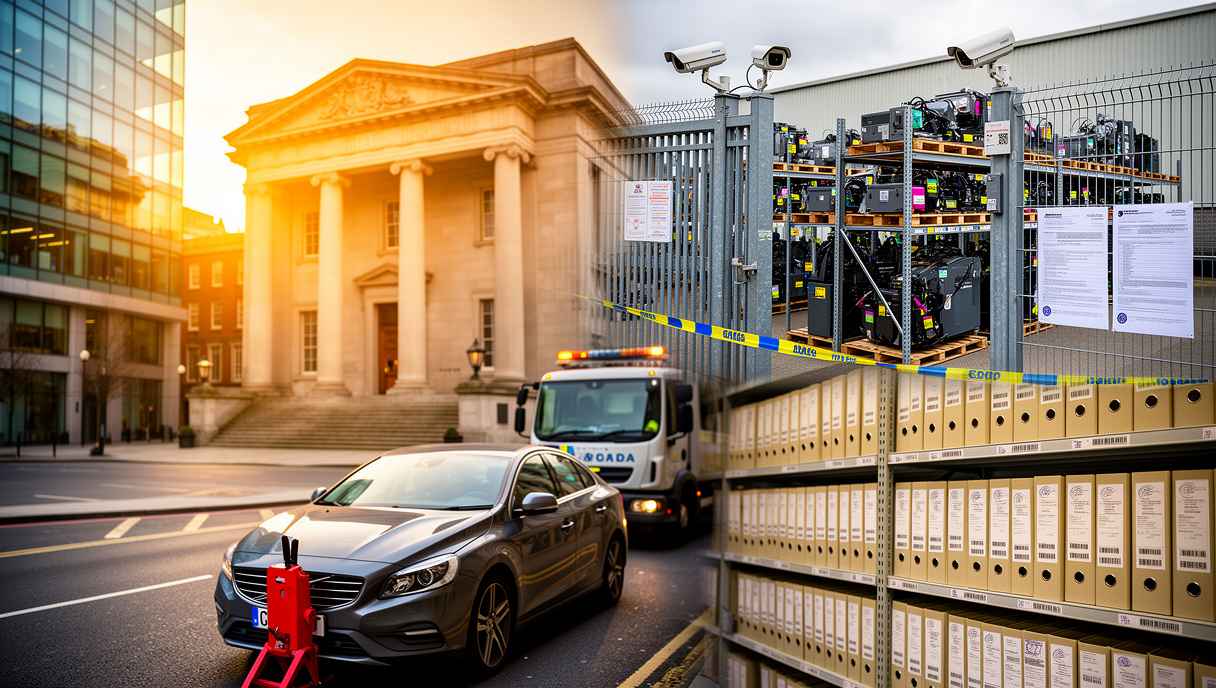
A practical, compliant approach: from pre-enforcement planning to post-recovery management
Effective recovery begins long before a team arrives on site. Pre-enforcement planning sets the foundation. This typically includes verifying instruction and authority, reviewing security or title documents, mapping stakeholders, and identifying any court directions or receiver appointments that frame the scope of action. A concise risk assessment anticipates site access constraints, welfare concerns, potential conflict flashpoints, and health and safety issues. The outcome is a plan that aligns compliance, timing, and resources with clear decision gates and reporting points.
Engagement strategy is equally critical. Respectful communication can turn a high-friction scenario into a cooperative one, enabling voluntary surrender, key handover, or scheduled collection. Vulnerability and duty-of-care protocols help teams recognise when to adjust tone and tempo. Where necessary, coordination with legal advisers, insurers, and—if appropriate—An Garda Síochána ensures actions proceed lawfully and safely. Throughout, trained personnel apply conflict management skills, lone-worker safeguards, and dynamic on-site risk assessments to protect people, assets, and reputations.
On the ground, precision and documentation drive value. Teams secure premises or vehicles, photograph and video-record condition, inventory contents, and package accessories, keys, or documentation. Tamper-evident seals, labelled containers, and time-stamped media reinforce chain of custody. For plant and machinery, operational checks, serial validation, and protective measures (e.g., drip trays, battery isolations) reduce deterioration prior to transport. Where property assets are involved, deeds management becomes pivotal: cataloguing title documents, confirming completeness, and storing or transferring them under controlled access with full audit trails.
Post-recovery management translates control into outcomes. Storage is arranged with appropriate security, insurance, and environmental protections; access is logged; and condition is periodically reviewed. Reporting packages provide structured updates—event timelines, evidential media, and next-step recommendations. Sale or remarketing strategies can be scoped early to minimise dwell time, while legal teams receive the documentation needed to support proceedings or settlement discussions. Sensitive data discovered within recovered assets—such as documents left in vehicles or digital media with personal information—is handled under GDPR-aware procedures, including secure containment and client-directed erasure protocols.
Crucially, a compliant approach is not just defensive; it is commercially constructive. Clear records help preserve value on resale, substantiate warranty claims or indemnities, and support fair dispute resolution. They also equip risk committees and executives with the visibility to make timely decisions. By combining enforcement capability with methodical oversight and transparent reporting, organisations reduce exposure and keep operations moving without unnecessary escalation.
Service scenarios across Ireland: banking, corporate, and public sector use cases
Financial services and leasing: A lender facing arrears on a light commercial fleet needs swift, low-friction recovery from multiple depots around Dublin and Limerick. A coordinated plan confirms authority to act, establishes contact with depot managers, and schedules evening collections to avoid trading hours. Vehicles are documented, keys reconciled, and manufacturer accessories secured. Within days, the fleet is consolidated at a guarded storage yard with maintenance checks, and resale preparation begins. The lender benefits from reduced depreciation and a defensible evidential record that supports downstream negotiations.
Receivership and insolvency: A receiver appointed over a mixed-asset portfolio in Cork inherits partially fitted retail units and stored equipment. The immediate priorities are to secure access, change locks where authorised, preserve stock, and stabilise the environment. Inventories are created, items are tagged, and mechanical assets are protected from deterioration. Where property paperwork is fragmented, deeds management services locate, verify, and catalogue documents. The receiver gains control, reduces insurance risk, and can plan disposals or assignments with dependable asset data.
SMEs and corporates: A technology supplier needs to retrieve leased hardware from multiple customer sites across Galway and Waterford after contract termination. Recovery teams coordinate appointments to minimise disruption, manage user data handover, and provide chain-of-custody logs for each device. Items are sanitised per client instruction, tested, and readied for redeployment. The supplier protects margin, avoids write-offs, and demonstrates contractual compliance—vital for maintaining brand trust in competitive markets.
Public bodies and state-funded projects: A state agency must centralise specialist equipment following a programme change. Sites are dispersed across Mayo, Donegal, and Kerry. A nationwide plan sequences collections to limit travel costs, verifies serials against asset registers, and ensures safe handling and storage that aligns with public procurement requirements. Clear reporting supports audit trails and parliamentary queries, while careful engagement with local stakeholders maintains continuity of essential services during the transition.
Legal and enforcement support: A law firm acting for a creditor obtains a delivery-up order for specified goods in a warehouse near Naas. Pre-attendance coordination sets expectations on identification, site safety, and document exchange. If required, attendance is aligned with court officers or Garda presence. On-site, items are matched to the order, photographed, and removed without disturbance to neighbouring tenants. The result is a precise, legally sound execution that avoids collateral issues and accelerates case closure.
Challenging environments: Rural recoveries around the Midlands may involve agricultural machinery sited on soft ground or remote wind-farm components with restricted access. Planning accounts for ground conditions, specialist transport, and weather delays, while stakeholder engagement anticipates tenancy or land-rights sensitivities. In city centres, time-sensitive operations might rely on early-morning windows, traffic management, and discreet approaches to protect client reputations. In both cases, success hinges on local knowledge, robust H&S practices, and an unwavering focus on compliance and documentation.
Across these scenarios, the value proposition remains consistent: keep assets visible, controlled, and documented; align actions with regulatory and contractual frameworks; and provide decision-makers with clear, timely reporting. Whether the objective is rapid recovery, staged consolidation, or pre-enforcement planning that prevents escalation, a structured and ethical approach to Asset Recovery in Ireland safeguards value and supports smoother operations in demanding commercial conditions.

Vienna industrial designer mapping coffee farms in Rwanda. Gisela writes on fair-trade sourcing, Bauhaus typography, and AI image-prompt hacks. She sketches packaging concepts on banana leaves and hosts hilltop design critiques at sunrise.